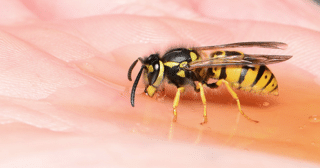
Can Wasps Help Prevent Cancer? The Surprising Link Between Farming, Pesticides, and Predators
From pest to protector: Can wasps help us reduce cancer risk? As surprising as it sounds, these often-feared insects may be key players in the future of organic farming and even human health. With growing concern about the long-term effects of pesticide exposure, including potential links to cancer, exploring natural alternatives has never felt more urgent. What if we let wasps handle the bugs? Moving them to farms could mean fewer chemicals and more natural balance.
In this blog, we’ll explore how wasps are not only powerful allies in pest control, but how their role in reducing pesticide use can support healthier soils, cleaner waterways, improved farm animal environments, and even potential public health benefits—offering a more sustainable and resilient food system for all.
Our Story: From Pest Kill to Pest Relocation
For over ten years, Platoon Pest Control has served homes and farms across South Wales with innovative, eco-friendly solutions. Early in my training, I grew uneasy at the industry norm that “pest control” felt more like “pest kill.” Instead, I became curious about which insects benefit our environment and that’s how our signature wasp nest removal and relocation service was born.
Today, as the only pest control company in the UK to relocate wasp nests, we safely move them from urban sites into farms. This allows wasps to continue their natural pest control work without being destroyed, helping reduce pesticide use while promoting ecological balance.
Why Most People Fear Wasps
Despite their ecological benefits, wasps have a terrible reputation.
Fear of Stings
Most stings occur when people unknowingly approach or disturb a nest that is hidden from view. This can lead to panic and aggressive responses from the wasps, resulting in painful stings.
Managing Risk Through Awareness
Pest controllers can play a vital role in mitigating this fear by relocating wasp nests to farms. By positioning the nests in visible containers, farmers will be informed of their locations and can maintain a safe distance. This proactive approach reduces accidental disturbances, allowing farmers to benefit from the wasps’ pest control capabilities without the associated risks.

How Wasps Control Crop and Livestock Pests
Natural Hunters
They hunt and feed on a wide range of crop-destroying pests, including aphids, caterpillars, flies and more. This reduces the need for chemical pesticides.
Wasp Population Power
A paper nest species such as Vespula vulgaris (common wasp) can grow to 5,000 wasps at its peak. Around 20%–40% of those will be foragers at any time—roughly 1,000–2,000 active hunters per nest.
Each forager captures 5–15 insects per day, feeding larvae in the nest. That adds up to a staggering 5,000 to 30,000 pests removed daily—without any chemical input.
Managing Flies on Farms
Wasps are particularly helpful in controlling fly populations around livestock. Flies are more than just a nuisance—they can spread diseases among cows, sheep, pigs, and horses. By preying on these pests, wasps make farm environments cleaner and safer.
However, wasps nesting inside stables or barns can be dangerous to both animals and workers. In these cases, relocating the nest to a safe outdoor location nearby allows farmers to benefit from their pest control without the risk.
Addressing a Common Concern: Will Wasps Eat My Fruit?
One of the primary concerns farmers have is that wasps will feed on crops—especially apples and other sweet fruit.
This typically happens late in the season, after the queen leaves the nest to hibernate. The remaining workers no longer have larvae to feed and begin seeking sugar for themselves.
To manage this:
- Provide sugar water near the nest.
- Leave out overripe fruit (such as windfall apples) at a distance from the healthy crop.
This simple strategy redirects their attention and protects your harvest.
Habitat Loss: A Barrier to Natural Pest Control
Modern farming practices often eliminate the dense vegetation that wasps rely on to build their nests.
Sparse Hedgerows
Large open fields with thin or trimmed hedgerows lack natural shelter, meaning wasps are less likely to nest there. This limits their potential as pest controllers.
A farmer I spoke with remembered being told in the 1970s to spray chemicals for frit flies, simply because there weren’t enough natural predators—like wasps—on the land. This highlights how dependent we’ve become on chemicals due to lost biodiversity.
Forestry Practices
Clearing dense woodland to encourage wildflower growth is great for pollinators like bees—but too much clearing can harm wasps. Without cover from rain and wind, paper nests can collapse, decimating colonies.
A better approach is balanced forestry, keeping enough dense areas intact to support wasps while also maintaining open spaces for pollination.
Comparing Wasps to Ladybirds: Who’s Better?
Both wasps and ladybirds (ladybugs) are valuable natural predators—but they differ in scale, strategy, and efficiency.
Feature | Ladybirds | Wasps (e.g. Yellow Jackets) |
Daily catch rate | 20–50 aphids per beetle | 5–15 insects per wasp |
Population | Dozens in a field | Up to 5,000 in one nest |
Pest range | Mostly aphids | Aphids, caterpillars, flies, and more |
Ladybirds are effective for aphid management. However, wasps are unmatched for large-scale, general pest suppression across a wider range of harmful insects.
No other predator can match the numbers and range of prey that wasps handle daily.
Long-Term Benefits of Wasp-Based Pest Control
The implications of encouraging wasp populations are far-reaching:
✅ Time Savings
Farmers would save significant time previously spent on applying pesticides. With wasps actively hunting pests, there would be less need for routine chemical applications.
✅ Cost Reductions
The financial burden of purchasing pesticides could be alleviated. As farmers turn to natural pest control methods, they could allocate those savings to other areas of their operations.
✅ Healthier Ecosystems
Chemical pesticides harm soil microbes, pollute waterways from runoff and kill off non-target insects. Wasps offer control without collateral damage.
✅ More Organic Food
With a decrease in pesticide usage, more organic produce could enter the market. This increase in availability could lead to lower prices for organic food, making it accessible to a wider audience.
✅ Lower Cancer Risk
In the UK, pesticide levels in food are regulated and monitored by the Health and Safety Executive (HSE) to ensure they remain within safe limits.
The UK government recognises the risks associated with excessive pesticide use. In the UK Pesticides National Action Plan 2025, it acknowledges that while pesticides play a role in supporting domestic food production and maintaining public spaces, their overuse can contribute to biodiversity loss and lead to “unacceptable human exposure levels”. The document highlights concerns such as pesticide resistance and environmental damage, and outlines a national strategy aimed at reducing these risks across all four nations of the UK. While the plan doesn’t explicitly mention cancer, it shows that the government is aware of the long-term harms associated with pesticide reliance—and is actively seeking more sustainable, safer alternatives for both people and the planet.
There is ongoing debate among scientists and health organisations about the potential cancer risks associated with insecticide use. While opinions differ, both sides agree on one thing: more research is urgently needed to understand the long-term effects on humans.
By turning to natural pest control methods, such as relocating wasps to farms, we can help reduce pesticide use—lowering exposure for farmers, consumers, and the environment. This shift supports long-term public health and may contribute to cancer prevention efforts.
Conclusion: Rethinking the Role of Wasps
Wasps are not the villains they’re made out to be. When relocated responsibly, these insects can:
- Cut down pest populations drastically
- Reduce chemical use
- Improve farm biodiversity
- Protect livestock
- Contribute to public health
At Platoon Pest Control, we’re showing that pest control doesn’t have to mean wiping everything out. It can be about working with nature, not against it—and finding smart, sustainable ways to keep things in balance.
Want to Relocate a Wasps Nest?
If you’ve got a wasp nest and want to explore relocation—rather than extermination—contact Platoon Pest Control today.
Let’s give wasps back the job they were built for.

One Comment
Thank you Terry.
It is wonderful that a pest control company has such a holistic overview of its own practices. Of course wasps have an important part to play in the ecology. Why else would they be there? As you imply, there are no ‘pests’ as such; only species which have found themselves in the wrong place or out of balance with their environment. All living things, without exception, have earned their right to be here, and it’s only occasionally necessary to make adjustments which restore them to their proper place and proportion. Hence good people like yourself. Killing, or eradication, apart from being impossible, is a fundamental misunderstanding of the processes by which an ecosystem sustains itself, and will only lead to further imbalance.
Well done for displaying such an enlightened view of your work: if there were more ‘pest’ controllers like you, harmony between species would be greatly benefitted. Thank you very much indeed.
Alas that such levels of respect and understanding are not extended to all the wonderful creatures with which we share the planet.
Steve and Sally